All workers have the right to refuse work if they believe it could be dangerous to themselves or others. Workers cannot be disciplined or penalized for exercising this legally protected right. As an Employer, you have a legal responsibility to take the concern seriously and respond right away.
If a worker feels that they cannot safely complete a task, or if they’re unsure how to safely complete a task, it is essential that they do not attempt that task until they feel safe to do so.
These situations are often resolved collaboratively by assisting the Worker, providing training, or taking simple corrective actions. However, if after efforts to resolve the situation, the Worker still does not feel safe completing the task, the Worker must follow the steps of an official work refusal process. This involves:
- Bringing their concern to their Supervisor, Safety Representative, or Joint Occupational Health and Safety Committee (JOHSC).
- Working together to control the hazard the Worker identified as unsafe.
- Documenting the steps that were taken to control the hazard.
If after completing your workplace’s official work refusal process the Worker still believes there is a safety concern, they can then report the unsafe situation through WSCC’s Report Unsafe Work page on WSCC Connect.
What is Unsafe Work?
Unsafe work, as defined in the OHS Regulations and Safety Acts, is a situation that exposes a worker to “unusual danger”. Often, this means unsafe work is a job-related risk that:
- Is outside of the Worker’s regular work tasks, or
- Is related to work conditions that are so extreme or unsafe that workers could not continue to safely perform their job.
Basics of the Unsafe Work Refusal Process
- Employers and Supervisors must ensure that Workers understand their right to refuse unsafe work and the correct steps to follow to do so (refer to “Workplace Safety Roles and Responsibilities” and the steps outlined below).
- Ensure your workers understand how to report unsafe work to you.
- The work refusal process is intended to prevent injuries and identify workplace hazards.
Steps Employers must follow when a Worker reports unsafe work
Employers must understand the proper steps to follow for handling a report of unsafe work, and must communicate this to Workers. If a Worker has reason to believe a task that they have been assigned is unsafe, they must:
- Step 1: Stop work and report to their Supervisor.
- Step 2: An investigation begins immediately with the Worker, their Supervisor, and another worker.
- Step 3: The Worker chooses a witness to accompany the investigation.
- Workers have the right to have a union representative, OHS team member, or a co-worker of their choosing present with them during the investigation.
- Step 4: The Supervisor must notify the Worker of the investigation results, and any steps taken to correct the danger.
- Examples of correction steps could include:
- Updating work procedures
- Providing new training
- Having a safety talk to discuss the issue
- Moving a job to a different day or locations
- Examples of correction steps could include:
- Step 5: If the Worker deems it is now safe to proceed with their work, they sign off on the corrective steps taken and return to work; or,
- Step 6: If the Worker believes the danger still exists, they must notify the WSCC to investigate further.
Contacting the WSCC is the last step in the escalation process for formal work refusals. Unsafe work refusals are often resolved by following the first six steps listed above.
Required Documentation
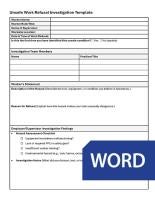
- If a Worker refuses unsafe work, document Steps 1-6 from above, including dates, descriptions of any corrective actions taken, and the agreement with the Worker that it has been resolved.
- If Steps 1-6 do not resolve the situation, contact the WSCC for assistance. A WSCC Safety Officer will request your documented efforts to remedy the situation.
Regulatory Reference
- OHS Regulations: Sections 21, 2(i)
- Safety Acts: 13 (1-4)